skip to main |
skip to sidebar
Posted by
Unknown
at
07:59
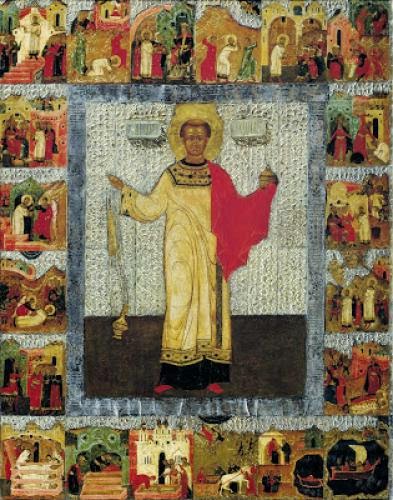
St. Stephen the Protomartyr (Feast Day - December 27)
By Protopresbyter Fr. George Papavarnavas
Saint Stephen belonged to the chorus of the Seven Deacons, who were commissioned by the Apostles to serve at "Agape" meals. Because the number of Christians in the early Church were constantly increasing, complaints were made by the Hellenists to the Jews because their widows were neglected in the daily distribution of food. The Apostles did not want to abandon the preaching of the Gospel to serve tables and for this reason they told the Christians to choose seven men, who were "full of the Holy Spirit", and they were appointed as deacons and ministered in that area.
The Protomartyr Stephen was distinguished among the deacons for his zeal and love for Christ, for the sake of which he was made worthy to be the first to spill his blood. Apart from ministering at the tables, he also engaged in preaching the Gospel, and by the Grace of God he did many and great miracles. Arrested by fanatical Jews, he was asked to give an answer before them, having been slandered for blaspheming Moses and God. His defense before the Sanhedrin of the Jews was a harsh criticism of their unbelief and crime committed in crucifying Christ. During his speech, while full of divine zeal and the Grace of the Holy Spirit, he was made worthy to see the glory of God. After his public confession that he saw the heavens opened and Christ standing at the right hand of God the Father, the Jews not only did not believe him, but they became even more enraged. They pounced on him like hungry wolves against their prey, and they stoned him with fury. Saint Stephen, in imitation of Christ on the Cross, was calm and peaceful, and he supplicated to Him that He not count this sin against his executioners. And while praying, he delivered his soul into the hands of God.
At this point it should be emphasized that his imitation of the life of Christ was not external, which is achieved by artificial methods and human resources, but it was the fruit of communion with God.
In his Apolytikion, the entire life and deeds of Saint Stephen are outlined:
"For the struggles you endured for Christ God, a royal diadem crowns your head, O First Champion of Martyrs. For you refuted the folly of the Jews and beheld your Savior on the right of the Father. Ever beseech Him, therefore, for our souls."
We will try to analyze briefly two points of this wonderful hymn.
1. "FOR THE STRUGGLES YOU ENDURED FOR CHRIST GOD, A ROYAL DIADEM CROWNS YOUR HEAD, O FIRST CHAMPION OF MARTYRS."
The Protomartyr Stephen faced in his life many difficulties, endured various temptations and underwent great sacrifices for the love of Christ and the spread of the word of His truth. He undertook the sacred service of the Gospel that he was commissioned with and exercised great responsibility, having previously purified his soul of the passions and richly accepted the Grace of the All-Holy Spirit. This last point is very important and shows the character of Orthodox missions, which must be preceded by a personal mission, namely the personal struggle for purification and sanctification, and then afterwards extend to a mission towards others. The blessed Elder Paisios "rejoiced when someone told him they wanted to be a missionary and he taught them how to be a correct missionary. He expressed the genuine Orthodox conception of mission, considering it necessary to begin the mission with themselves. They ought to first sanctify themselves, then sanctify others. Our self is the foundation of our missionary work. If it collapses, the entire work is in danger. Therefore, the challenge is for a person to receive Grace, to be sanctified. From that moment their essential mission begins" (Hieromonk Isaac, "Life of Elder Paisios the Athonite", pp. 658-659 [Greek]).
2. "FOR YOU... BEHELD YOUR SAVIOR ON THE RIGHT OF THE FATHER."
The unerring mouth of Christ said those sweetest words: "Blessed are the pure of heart, for they shall see God." This has been verified constantly throughout the ages, because there always existed and always will exist until the Second Coming of Christ people like Saint Stephen.
Saint Stephen the Protomartyr, while speaking to the Jews of the Sanhedrin, saw the glory of God and therefore could theologize unerringly, as well as endure without complaint and peacefully his martyrdom, because both are identified with the empirical knowledge of God and organic communion with Him. "Nobody can endure martyrdom with only their own strength, no matter how strong a character they possess, because the testimony and martyrdom for Christ is a fruit of the vision of God" (Metropolitan Hierotheos of Nafpaktos).
Of course, spiritual progress cannot be achieved from one day to another. Nobody can reach the higher stages of the spiritual life and taste the sweetness and joy of the living presence of God, unless they have previously been tested "as gold in a furnace" and endured "the heat of day and the frost of night" for the love of Christ, for "without pain, or praxis or theoria the soul cannot be corrected" (Great Canon). "Praxis" is the practical life, the struggle and effort to live the divine commandments and the purification of the passions, and "theoria" is the vision of the glory of God.
"Patience without self-pity and complaint, coupled with glorification and thanksgiving" is spiritual maturity and puts an individual within prospect of sanctification and salvation.
Source: "Ekklesiastiki Paremvasi", , January 2005. Translated by John Sanidopoulos.
Posted by
Unknown
at
04:45
Last spring I put up several posts making fun of Salem, Massachusetts' push for witchcraft-themed tourist dollars, a situation profoundly ironic because in fact Salem has no history of real witches, but rather baseless accusations that got a bunch of innocent people killed in 1692. In light of this and the ridiculous commercialism that surrounds the place, back then I went ahead and dubbed Salem "the clown shoes of magick." Things died down for awhile over the summer, but let's face it, now it's almost Halloween. The clown shoes are back, at least for the next week.
Ghouls representing two downtown Halloween attractions, the Nightmare Factory and the Witch Mansion, have been confronting each other on the pedestrian mall that separates them.
In the latest incident, a demonic representative of the Witch Mansion was accused of "bumping" the zombies from the Nightmare Factory who were strolling on the mall walkway to lure customers into the store.
That followed an accusation by the Witch Mansion that zombies from the Nightmare Factory were shouting, "Witch Mansion sucks," during the city's annual Zombie Walk on the "Night of the Living Dead" commemoration.
Police were called to the scene but an employee of the Nightmare Factory told officers they were merely mouthing "White Sox," suggesting zombies from Chicago had invaded Salem.
To understand the conflict, you need to know businesses in Salem are fiercely competitive during the Halloween season, when thousands of tourists visit the haunted houses, witch museums and costume stores.
I guess you also have to understand that in Salem the ratio of idiots to smart people is apparently almost paranormally high, at least among those loud and stupid enough to make the news. It's a wonder that the whole place hasn't imploded yet from the sheer gravitational mass of epic fail contained within its borders.
Now, keep in mind that I'm not slagging on the town itself or everyone who happens to live there. Plenty of Salem residents are fighting the good fight, trying to emphasize the city's nautical history and genuinely amazing architecture instead of all this dimestore witch crap. I can't help but respect anyone with the fortitude to keep that up, especially during the silly season, and I wish all of them the best.
Origin: thelema-and-faith.blogspot.com
Posted by
Unknown
at
21:05
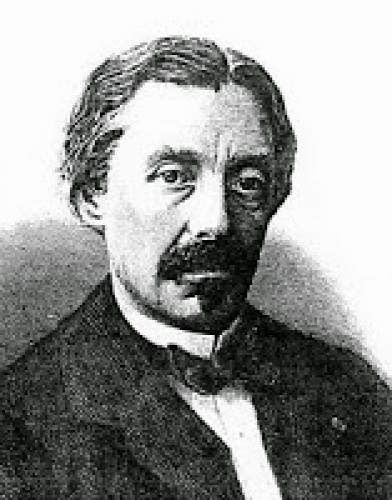
Leon Foucault was a French physicist. Born Paris, France, Sept. 18, 1819. Died Paris, Feb. 11, 1868.
Foucault invented a type of pendulum, since named in his honor, which gives direct evidence of the rotation of the Earth. He also demonstrated the Earths rotation by means of a gyroscope.
Some of Foucaults most important work was in the study of light. He improved the method of measuring the speed of light devised by the French physicist A. H. L. Fizeau. By means of this method he found that the speed of light is inversely proportional to the index of refraction of the medium through which the light is passing. His other discoveries included a polarizer for light and an improved method of making telescope mirrors. Foucault also studied the eddy currents, sometimes called Foucault currents, produced when a copper disk rotates in a magnetic field.
Read more >>
Reference: pagan-magic.blogspot.com
Posted by
Unknown
at
17:57
My name is Deborah Blake and my blog is called "Scrawl the Witchy Way." Hand over are a glitch of reasons for that. The greatest stale reasons manage to do with the fact that I am a practicing witch (don't worry-I haven't turned an editor trendy a toad in duration) and manage published five nonfiction books on the section of modern witchcraft. And witches put on up in my creation disdainful steadily than not. For state of affairs, my built-up mirage series realize a protagonist who is a witch-cop who union to dead wound losses.I more to the point teach a few inside online play classes, by one called "Witchcraft for the Frightening Paddock," in which I help writers learn how to message witch characters in the absence of putting in a lot of explanation.But that's not really why I gave the blog that name. In truth, it has to do with magic.You see, I capture in magic. Not just fairy allegory magic-although I close to fairy tales, and their modern retellings. Physical life magic that comes from within and doesn't wretched an moving wand or an curiosity godmother. This belief affects my play, and I'm guessing that my play more to the point affects this belief. So let's talk about magic, shall we?Shove witches-including Wiccans, who are a regard subset of a wider group-practice a nature-based religion, based in part on ancient practices and broaden on to put away the gangster sixty or so duration by oodles modern interpretations. Hand over is a epic model of practices and beliefs, but one of the matter that we all manage in traditional is the acceptance of magic as a precise resolve in the liberty. How this resolve is tapped trendy and recycled is a effectively for far-off conversation (oh, who am I kidding-within the modern witchcraft community, Something is a effectively for far-off conversation), but we all be the owner of its bodySo what is magic, and how can you, as an designer, tap trendy it and use it to add joy to your play, consciousness to your life, and perhaps even use it to bestow your play career a boost?At the outset of all, don't worry-you don't manage to be a witch to work with magic. In fact, you credibly beforehand do so, in stunted ways you depth not embrace of using that face.Hand over is the stunted ordinary magic, for state of affairs, that greatest writers use as puff for their play. Birdsong in an formerly dear emergence, the amusement of a child at emerge, the way your cat seems to know just being you craving to be comforted-to me, these are minuscule rubbish of magic, free-floating close to motes in the summer beam. Able-bodied writers use this ordinary magic in two ways: they fold not permitted stunted odds and ends to be recycled when in just the right panorama, and they allow the gift of these laudable moments to feed their souls, so that they can categorize departure, and categorize play.Scrawl can come from oodles spaces, by frustration, sourness, and sorrow. But it necessity more to the point come from joy, and these concise bits of magic can categorize that joy malleable put away your summit and argue and out onto the page.And afterward offering is the other zealous of magic-the resolute zealous, somewhere you set out to accomplish something by drumbeat trendy the resolve of the liberty that, for lack of a haughty word, we comprise magick (with a k, so you know it from the unbending zealous). Witches take care to see this energy as something that is out offering, not in use to part who requirements it and can blueprint out how to rub on it. Creative idea of it close to a arithmetical end that no one has been emotive to find out. Human race recycled to embrace of extent as rubbish, until Newton misshapen the way we looked at the world. Trickery is close to that.Witches capture that magic is real, and can be recycled to give somebody no option but to added to change in the world. Division of this belief has to do with the Law of Returns: what you put out is what you get back. [No, THE Sly didn't invent this construction, and it isn't actually a secret. Sigh.] In order to do this, we use three things: picture, control, and leave.Suggestion is what you insolvency to accomplish. For state of affairs, say you insolvency disdainful time for play. You leave insolvency to make computerized you manage your picture unpolluted. Once all, you don't insolvency to get disdainful time for play in the function of you're laid up with a disappointment leg, or in the function of you lost a job you valued. (Not working a job you didn't love, now, that's various advertise...) So you may extinct up deciding that your actual picture is to give somebody no option but to disdainful time in your life for play, in a added to way, in the absence of sinking your existing or having a unpromising effect on your relationships. Or something close to that. It leave change from living being to living being.Consequently comes control. Matter is what directs that picture out trendy the liberty in a indicative way. Witches give somebody no option but to control put away ritual, which can be as simple as a progress put away a sacred fuel or as involved as casting a circle, job in the elements, invoking a goddess, enlightenment candles and incense, tapping a carton or chanting, and afterward saying a spell. But you don't manage to do any of that, if it doesn't work for you. You can acquire a cleanse and light a white candle you manage etched with the thing you expectation. You can discussion. You can even just pray or ask for help.Your leave is what sends your picture out, when you manage listening carefully it. The intellect we use control is to get the greatest power out of our leave. Let's quality it-most of us avail yourself of far-off of our time curb spherical close to crazy, con matter for others, and responsiveness fairly circulated and pulled in exotic orders. It can be bitter to control your leave under frequent card. That's why witches use ritual; it puts them in a exotic mental obtain, removing them from the qualms and distractions of collective life, so they can in point of fact control on what they insolvency.Just the once you manage your picture in argue, manage built your control as far-off as achievable, and manage every degree of your leave bringing up the rear it, afterward you send it out trendy the liberty. Ta da! You've done magick.Heart it work every time? Of course not. Heart it work right not permitted, in upright the form you expected? Perchance, perhaps not. But sometimes magick works in ways you smallest amount of iffy and brings you even disdainful than you'd asked for. And if whiz exceedingly, it depth bestow you something new to message about. And that's the best magic of all.PS--Don't not bother my "Scrawl Profitable idea" spell in Habitual WITCH A TO Z SPELLBOOK.
Posted by
Unknown
at
11:58
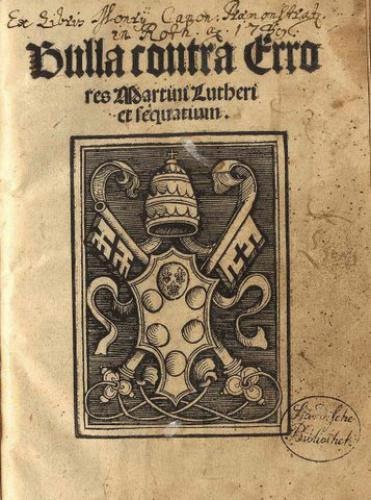
"
Front page of Exsurge Domine,"
Pope Leo X's bull calling Martin Luther to repent
In a piece arguing that God is the Author of schism (contrast with Galatians 5:19-20, which condemns schismatics) the Orthodox Presbyterian Church elder Brad Winsted recites the now-standard Protestant claim that Luther didn't really want to start his own church:
ONE OF THE OBVIOUS OUTCOMES OF THE PROTESTANT REFORMATION IN THE SIXTEENTH CENTURY WAS THE FORMATION OF A NEW CHURCH. MARTIN LUTHER HAD TO LEAVE THE CHURCH OF HIS LIFE, THE CHURCH TO WHICH HE HAD MADE SACRED VOWS. BUT HE HAD NO OPTIONS, FOR THE POPE HAD EXCOMMUNICATED HIM, AND THE ROMAN CHURCH CONSIDERED HIM A HERETIC. [....] IT SURPRISES PEOPLE TO HEAR THAT MARTIN LUTHER DIDN'T REALLY WANT TO LEAVE THE ROMAN CATHOLIC CHURCH WHEN HE POSTED HIS NINETY-FIVE THESES ON THE WITTENBERG CHURCH DOOR IN 1517; he wanted to reform it. He was a devout Roman Catholic at the time, in full agreement with papal authority and even the veneration of Mary. It was a slow, painful process, filled with anguish and tears that eventually brought Luther to the realization that the Roman Church placed its authority and traditions above Scripture and would not change. This claim is so common within Protestant spheres that I think people have just stopped thinking about what it is, exactly, that they mean by it. Compare and contrast Winsted's account with that of Lutheran pastor Matthew W. Crick:
FOR LUTHER, REFORMATION WAS NEVER ABOUT REVOLUTION. HE NEVER WANTED TO BREAK AWAY FROM THE ROMAN CATHOLIC CHURCH. He never set out to overthrow the church. But he knew the church was teaching many things not found in God's Word, such as penance, veneration of the saints, purgatory, and the supremacy of the pope.Winsted's and Crick's accounts are almost diametrically opposed: Winsted claims that Luther was a devout Roman Catholic, in full agreement with Church teachings, like papal authority. Crick claims that he dissented from papal authority, and disagreed with Church teaching all over the board. (Both of these accounts are wrong). The ONE THING that Winsted and Circk, and virtually all Protestant authors, agree upon is that Luther didn't want to break away from the Catholic Church.
What's meant by this, exactly? Again, I'm not sure that the people who make this claim have given it a lot of thought. In any case, by almost any reasonable standard, this claim is totally false. The late historian Eugene F. Rice, Jr., in his book "The Foundations of Early Modern Europe, 1460-1559", explained why the Reformation was never really a reform movement, at heart*:
A woodcut from Luther's Bible showing
the Whore of Babylon (Revelation 17) wearing a papal tiara
The leaders of the Protestant Reformation, too, were sensitive to ecclesiastical abuses and wished to reform them. Yet THE REFORM OF ABUSES WAS NOT THEIR FUNDAMENTAL CONCERN. The attempt to reform an institution, after all, suggests that its abuses are temporary blemishes on a body fundamentally sound and beautiful. Luther, Zwingli, and Calvin did not believe this. They attacked the corruption of the Renaissance papacy, but their aim was not merely to reform it; they identified the pope with Antichrist and wished to abolish the papacy altogether. They did not limit their attack on the sacrament of penance to the abuse of indulgences. They plucked out the sacrament itself root and branch because they believed it to have no scriptural foundation. They did not wish simply to reform monasticism; they saw the institution itself as a perversion. The Reformation was a passionate debate on the proper conditions of salvation. It concerned the very foundations of faith and doctrine. PROTESTANTS REPROACHED THE CLERGY NOT SO MUCH FOR LIVING BADLY AS FOR BELIEVING BADLY, FOR TEACHING FALSE AND DANGEROUS THINGS. Luther attacked not the corruption of institutions but what he believed to be the corruption of faith itself. The Protestant Reformation was not strictly a "reformation" at all. In the intention of its leaders it was a restoration of biblical Christianity. In practice it was a revolution, a full-scale attack on the traditional doctrines and sacramental structure of the Roman Church. It could say with Christ, "I came not to send peace, but a sword." IN ITS RELATION TO THE CHURCH AS IT EXISTED IN THE SECOND DECADE OF THE SIXTEENTH CENTURY, IT CAME NOT TO REFORM BUT TO DESTROY.If the core issue was simply that many Catholic clerics weren't living "according to the teachings of the Catholic Church", Luther could have been a reformer. There were countless who had gone before him who worked to clean up the Church, and several of these men were canonized.
But that "wasn't "what the Reformation was about: Luther wasn't trying to get Catholics to live up to Catholic teachings as much as he was denying Catholic teachings, and the foundations upon which they were built. Put simply, the Reformation was primarily about faith, not works.
"
Collier's Encyclopedia illustration, Martin Luther" (1921)
Bear in mind, it's not just modern historians who deny the whole narrative that Luther was a devout Catholic who got pushed out of the Church by the pope for asking too many questions or trying to clean things up. "Luther's own account" explains his schism was due to his rejection of both the "teaching authority" and the "teachings "of the Catholic Church:
THE CHIEF CAUSE THAT I FELL OUT WITH THE POPE WAS THIS: THE POPE BOASTED THAT HE WAS THE HEAD OF THE CHURCH, and condemned all that would not be under his power and authority; for he said, although Christ be the head of the Church, yet, notwithstanding, there must be a corporal head of the Church upon earth. WITH THIS I COULD HAVE BEEN CONTENT, HAD HE BUT TAUGHT THE GOSPEL PURE AND CLEAR, AND NOT INTRODUCED HUMAN INVENTIONS AND LIES IN ITS STEAD. Further, he took upon him power, rule, and authority over the Christian Church, and over the Holy Scriptures, the Word of God; no man must presume to expound the Scriptures, but only he, and according to his ridiculous conceits; so that he made himself lord over the Church, proclaiming her at the same time a powerful mother, and empress over the Scriptures, to which we must yield and be obedient; this was not to be endured. They who, against God's Word, boast of the Church's authority, are mere idiots. The pope attributes more power to the Church, which is begotten and born, than to the Word, which has begotten, conceived, and born the Church.By his own account, then, Luther left the Church because the Church has a pope, and the pope isn't a Lutheran.
And of course it's true that Luther's ideal was that the entire Catholic Church disband Her core structures, abandon Her core beliefs, and start practicing and believing as Lutherans. Who wouldn't go in for that kind of a deal? I'd gladly be a Jehovah's Witness, if by Jehovah's Witness, you mean Catholic. Luther would gladly be a Catholic, as long as you really mean Lutheran. But if that's the case, what does it mean to say that Luther didn't want to leave the Church? That's a bit of a meaningless statement, isn't it? I'll stay in your religion if you replace your religious teachings with my own?
I mean, has there ever been a schismatic or heretic who "wouldn't "say as much? Surely, Nestorius would have loved to stay in the Church, if the Church would only become Nestorian. Joseph Smith would have been happy to remain a Methodist if all of the Methodists agreed to accept the Book of Mormon and make him the head of their religion. You get the idea.
Plus, given that the Church has always viewed Her doctrines as irreformable (in the sense that She can't declare X to be true one year and false the next), Luther's obedience to the Church was premised off of Her doing the impossible. So the claim that Luther didn't want to leave the Church is either false or meaningless.
"*I'm indebted to Msgr. Michael Witt for tipping me off to this quotation. In addition to his work with the Archdiocese of Saint Louis and with Kenrick-Glennon Seminary, he's also a Church historian, with lots of audio resources on Church history over on his website."
Posted by
Unknown
at
12:29
WHAT CAN CHRISTIANS LEARN FROM OTHER RELIGIONS.By J. Philip Wogaman. Louisville: Westminster John Knox Press, 2014. Xiv + 135 pages. We live in a world in which it is increasingly likely that we will encounter someone of another faith tradition. In the community in which I live, in Metro-Detroit, there are large numbers of Hindus, Sikhs, Muslims, Jews, Orthodox Christians (of several varieties and ethnic backgrounds), along with the usual complement of Protestants and Catholics. If you're a student at a local school, the person sitting next to you quite possibly follows one of these "other" religions. If you're a Christian - as am I - is it possible to learn something from another religious tradition that can enhance your own faith? That is the question posed by Philip Wogaman in this book. Philip Wogaman once served as senior minister at Washington D.C.'s Foundry United Methodist Church, a congregation whose members included Bill and Hillary Clinton along with Bob and Elizabeth Dole. He also served as President of the Interfaith Alliance. He has also served as a professor of Christian ethics at a number of seminaries, including Wesley Theological Seminary. As one might expect he brings each of these experiences into this book. It is pastoral, theological, and sensitive to interfaith concerns. In the course of ten chapters, which began life as a sermon series delivered at Foundry United Methodist Church before his retirement from that ministry, he invites us to reflect on the question posed by the title of the book. He focuses his attention on primal religions, Judaism, Islam, Hinduism, Buddhism, Chinese religions (Taoism and Confucianism), and atheism. He adds another chapter that asks similar questions of several religions he is unable to address more broadly -- Jainism, Sikhism, Zoroastrianism, and the Baha'i movement. He writes the book as a Christian - noting where he, as a Christian, is of a different viewpoint or where beliefs such as reincarnation differ from Christian teachings. But even while reincarnation is not ultimately reconcilable with Christian understandings of human destiny, the idea of "karma "reminds us that there are consequences to our actions. Many readers may find it odd that Wogaman includes atheism in his discussion. As he himself notes, most atheists reject the idea that they are part of a religion - defining religion as belief in God. If that is what one means by religion then this might be true, but if we follow Paul Tillich's definition of religion as ultimate concern, then surely atheists have some sense of ultimate concern. In his presentation of atheism, he discusses two forms - Marxist atheism and Bertrand Russellish atheism, which is what we see in contemporary neo-atheism. Including atheism allows for a contrast between belief and non-belief. As you read the book you get the sense that he sought to give each religion a fair hearing - trying to describe the beliefs and practices of Hinduism or Islam in a way that adherents of those religions would recognize themselves. He works with the principle that in the course of interfaith dialogue, we must compare the best of the other with the best in one's own tradition. This is an important point to highlight. Too often people get into trouble by focusing either on extremists or on negative stereotypes. For instance - many Western Christians critique Islamic treatment of women, forgetting that in a majority of Christian traditions women have similar limitations. On the other hand, he notes the many similarities that faith traditions share - including moral imperatives concerning the common good. This sensitivity to the way others understand themselves is also seen in his decision to invite members of the faith communities he discusses to read and critique the presentation. Interfaith conversations require true dialogue for them to be successful. All participants need to feel free to teach and to learn. So, if Christians have something to learn from other faith traditions, then surely others have something to learn from Christians. Thus, in his concluding chapter, he shares some of the concepts that he thinks Christianity embodies that can be shared with others. These include the significance of Jesus to the religious discussion. Besides this, he suggests Christian efforts to pursue the critical interpretation of Scripture, ethical thinking, learning from the secular enlightenment, engagement with political life, and ecumenism. The book closes with fifty points to consider. Each of these points picks up on something that was discussed earlier in the book - forty-seven from faith traditions other than Christianity and three from Christianity. Number 47, which he derives from atheism, is important to the conversation - "Religion must not be promulgated by compulsion."Because this book began as a sermon series, it is quite accessible and readable. As one involved in interfaith work, I found this to be quite useful. He also demonstrated the difficulties that we encounter when we try to make sense of our own beliefs in conversation with others. In the discussions of Judaism and Islam, both of which have close ties to Christianity, he attempts to reconcile the Christian teaching on the Trinity with the stricter definition of monotheism present in Islam and Judaism. Thus, in the chapter on Islam he tries to demonstrate that Christians aren't tri-theists or polytheists, but in doing so he seemed to move to the opposite view, which is modalism (Father, Son, and Spirit end up being masks or functions rather than persons). Of course, that is my own issue - others might not be so discomforted by the presentation. Whatever qualms I might have with a point of doctrine here or there, I believe this is an excellent resource for helping Christian communities understand themselves in relationship to their neighbors whose faith is different, but who share the same humanity. Each chapter has a series of discussion questions, making this an excellent resource for an adult or even youth study group.
Posted by
Unknown
at
08:38
The full moon in February is known as the Quickening moon, it marks the official end of winter, and the quickening, the renewal of all things. While the skies are still gray, and the weather is cold, beneath the surface life begins to secretly stir. This moon phase is a time of abundance, ripening and completeness, heavy with fertility and female divinity. It is a time when the potential of all things begins to stir towards birth in spring, a time to work on our own inner power and confront personal truths in preparation for birth. This moon sheds enough light to help us see into our darkness, so that our energy can make its way to the surface to prepare for growth and healing.This is the season of Imbolc, the days when we know that if we can just hold on for a few more weeks, we might get lucky and see little green shoots peeking out through the snow and slush.CORRESPONDENCES: * Colors: "Purple and blue" * Gemstones: "Rose quartz, amethyst, jasper" * Trees: "Rowan, Myrtle" * Gods: "Brighid, Aphrodite, Juno, Mars" * Herbs: "Hyssop, sage, myrrh" * Element: "Fire" The word Quickening is also used to describe the first moment in pregnancy when a woman feels the movements of her baby. So too, this a time when new life is beginning, but still lies dormant. Pregnant animals, due in the spring, begin to feel the quickening of their unborn young. The earth itself is quickening, as seeds and bulbs far beneath the soil begin their journey towards the light. We know these things are coming -- and we know also that this is a good month to make plans for the future. We can dream and hope, and set goals for ourselves. Accept responsibility for mistakes you've made in the past, and move on.Magical workings this month should focus on personal achievements and advancement. This is an excellent time for fertility and childbirth spells.
Origin: wicca-teachings.blogspot.com