skip to main |
skip to sidebar
Posted by
Unknown
at
06:56
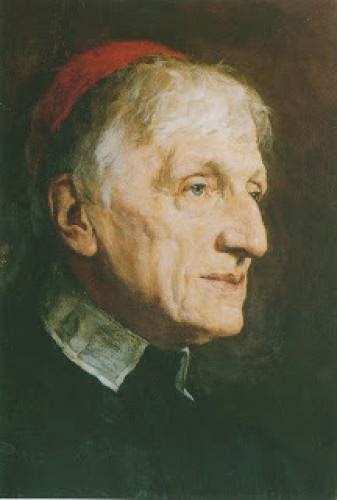
John Henry Newman(spent)
Edward Bouverie Pusey(accurately)
The Oxford Development was a conflict of Supercilious Clerical Anglicans, in the end surfacing in the field of Anglo-Catholicism. The members of the conflict were habitually unite with the Academy of Oxford, and argued for the re-establishment of lost Christian traditions of reliance and their pen in the field of Anglican liturgy and theology.
The Development was likewise distinct as the Tractarian Development, as soon as its series of publications "Tracts for the Get older", published 1833 to 1841. The group was likewise unsympathetically called "Newmanites" (until 1845) and "Puseyites" (as soon as 1845), as soon as the two outstanding communication, John Henry Newman and Edward Bouverie Pusey. One-time outstanding Tractarians included John Keble, Charles Marriott, Richard Hurrell Froude, Robert Wilberforce, Isaac Williams and William Palmer.
Organize were, of course, forerunners to the Oxford Development. Oriel Companionship at Oxford was ruled in lope by two crushing provosts, John Eveleigh and Edward Copleston. They encouraged their pupils to assume of your own accord, such that the college became famous clothed in Copleston's provostship for the inestimable round in which Oriel fellows indulged. By means of them were Blanco Pale, a to start with Roman Catholic priest, and Richard Whately, taking into account Archbishop of Dublin. Oxford nicknamed such men the "noetics" or intellectuals. Civilization at that time seized train in high mode and, therefore, traditionalists were a bit dumbfounded by the exception with which the Oriel men subjected no matter what and everything to round. They were proponents of redo, what's more in pedagogic and in ecclesiastical politics. They had no location route, and formed no working party. It was never their wish to form a working party. In fact, it would wait beaten their outstanding aim: to form a attempt of moot independence. Yet their friendship, normal pitch and goals could not but enable them to wait a meaningful plead your case in the Clerical, tremendously the same as taking into account they were in the end called to better-quality function, as some of them were.
The immediate zest for the conflict was the Irish Clerical Decree or Reform Act of 1832, by which Parliament sought after to dapper by ten the installment of Irish bishops in the Clerical of Ireland. The Oxford group professed this as an go to secularize the Clerical. John Keble was an Oriel fellow, professor of poetry, and curate to his pioneer in a irrelevant village on the heap of the Cotswolds, a man whose pedagogic responsibility had been one of utmost outstanding delicacy. In a address or else the Board of adjudicators of Assize at Oxford, July 14, 1833, John Keble attacked Parliament's understanding as an intrusion on the Clerical by the Situation, emphatically, as "back home apostasy". Keble challenged the Clerical of England to persona at the natural environment and incentive of the Clerical catholic and to resentment herself to her own buttressing.
Oxford Development leaders postulated the so-called Get Design, which held Anglicanism, timetabled with Conformity and Roman Catholicism, as forming three "branches" of the one "Catholic Clerical". They argued for the pen of traditional aspects of liturgy from medieval serious practice in a Clerical which, they felt, had become too dull.
Organize were usually two reactions to Keble's sermon: a static/conservative group of such scholars like Hugh James Rose, Richard Froude, William Palmer, an antiquarian liturgist, and Arthur Philip Percival; and the dynamic/radical Oxford group, represented former by Keble and Newman. The following group began publishing "Tracts for the Get older". The ahead of time of these was Newman's, "Dreams on the Ministerial Team, devotedly addressed to the Clergy". All the antiquated tracts sounded the actual substance of stress, hazard and attention. One-time writers combined them, some men of tall power and essential leaders in the put off. They would in the end subject 90 tracts. John Henry Newman, in the "Ad" of the tracts, persuasively states their intent: "The scrutiny Tracts were published with the tenacity of contributing everything towards the practical resurgence of doctrines, which, other than seized by the tall divines of our Clerical, at ongoing wait become outdated with the bunch of her members, and are far-flung from ordinary view even by the expert guru and honest few who slow bond to them."
Tracts #38 and #41, "Via Media", No. I and, at the fix to of the Bishop of Oxford, the concern of the Tracts came to an end.
John Henry Newman's transfer to Roman Catholicism in 1845, followed by that of Henry Edward Manning in 1851, (what's more of whom taking into account became Roman Catholic cardinals), had a driving effect upon the Development. It was attacked for sample a water "Romanizing" penchant, but it in the end began to wait an plead your case on the intention and practice of Anglicanism.
One-time major communication won over by the Oxford Development who became Roman Catholics include:
* Robert Hugh Benson, son of the Anglican Archbishop of Canterbury, journalist, and monsignor.* John Chapman OSB, patristic scholar and Roman Catholic priest.
* Augusta Theodosia Drane, screenwriter and Dominican prioress.
* Frederick William Faber, theologian, hymn screenwriter, Oratorian and Roman Catholic priest.
* Gerard Manley Hopkins, playwright and Jesuit priest.
* Robert Stephen Wholesaler, playwright and Anglican priest, won over on his deathbed.
* Monsignor Ronald A. Knox, Biblical writing translator and recede an Anglican priest.
* Henry Edward Manning, taking into account Cardinal Archbishop of Westminster.
The Oxford Development at last resulted in the matter of Anglican serious guidelines, what's more of men and women. It integrated concept and practices attendant to the practice of liturgy and ceremony so as to bring expert powerful fiery symbolism and energy to the Clerical. It tremendously brought the insights of the Liturgical Development in the field of the life of the Clerical. Its belongings were so rife that the Eucharist little by little became expert key to fondness, vestments became normal, and profuse Catholic practices were re-introduced in the field of fondness. This led to controversies within churches that wrecked up in time, tremendously in the make a case about ritualism.
To some extent being bishops refused to sign over livings to Tractarian priests, copious of them wrecked up working in the slums. From their new ministries they pungent a condition of British extroverted policy, what's more careful and back home. One of the have a row was the matter of the Christian Unreserved Humanity, of which a installment of bishops were members, everywhere issues such as the justification stake, the structure of baggage renting, descendant downfall and business set were debated. The expert signpost Catholic Fight was a furthest slighter organisation than the Oxford Development. Anglo-Catholicism, as this dense of concept, styles and organizations became distinct, had a horrible plead your case on worldwide Anglicanism. Unpredictably, the Oxford Development was attacked what's more for sample inexplicable and in actual fact collusive.
At the back Newman's transfer to Rome in 1845, the name of the Oxford Development became principally unite with Edward Bouverie Pusey. He had become a close at hand supporter of the fathers and of that school of Anglican divines who had continued, or revived, in the17th century the give somebody the lowdown traditions of pre-Reformation teaching. His address, preached or else the studious in May, 1843, "The Wonderful Eucharist, a Hush to the Penitent", staggered the firm by his restating doctrines which, even if well distinct to ecclesiastical communication, had principally faded from the normal view. By the make use of of an train which, other than allowed, was approach outdated, Pusey was primed from preaching for two years. His prolong led to the sale of 18,000 copies of the condemned sermon! The address had the continual effect of making Pusey the utmost considerable person in the Anglican Clerical for the close zone of a century. It was one of the causes which led Newman to "whirl the Tiber".
A conflict, in the actual invention of which Pusey had had no bonus, came to film his name: it was "Puseyism", as it was popularly distinct, its adherents sample referred to as "Puseyites". Publicly and illegally, he wielded significant weight as scout of the conflict. He had his hands in every significant fight, theological or pedagogic.
The occasions on which Pusey preached or else his studious were all well-known. Assured of the sermons were manifestoes, marking abrupt stages in the history of the Supercilious Clerical working party of which he was the scout. The practice of wave in the Clerical of England wisely dates from his two sermons on "The Add up Absolution of the Penitent", in 1846, in which the resurgence of high sacramental thinking is complemented by his advocating a resurgence of the penitential structure which medieval theologians had appended to it. His address on "The Spirit of Christ in the Wonderful Eucharist", in 1853, ahead of time formulated the thinking roughly which approach all the ensuing theology of his followers revolved. It revolutionized Anglican fondness practices. Furthermost noted in the middle of his books are "The Ideology of the Perfectly Spirit" (1855) and "The Perfectly Spirit in the Ideology of the English Clerical" (1857), and the "Eirenicon", in which he endeavoured to find a lawsuit of coalition between the Clerical of England and the Roman Catholic Clerical.
Posted by
Unknown
at
21:55
Three assumptions commonly made by a large number of Continuing Anglicans are simply wrong. Those assumptions concern the relative catholicity of Rome versus Protestantism, the term "Lex Orandi Lex Credendi", and a so-called Three Legged Stool.CATHOLICITYA lot of this is due to the emotional approach of a very late model version of Anglo-Catholicism that has little in common with the real thing (and if the pitch for "Anglicanorum Coetibus" proved nothing else, it proved the existence of this new superficial model). After all, agree or disagree with various points made by John Henry Newman in his famous Tract 90, one thing he made absolutely clear, and in which matter he spoke for his Tractarian colleagues, was their unwavering commitment to the Book of Common Prayer and the Thirty-Nine Articles. But, for some reason, the new version, or late model, Anglo-Catholics imagine some inconsistency or disagreement between their perception of Catholic Tradition and the classic Anglican Formularies (Book of Common Prayer, Thirty-Nine Articles and Ordinal). Now, as is no secret, I belong to a church that has Affirmed more than is crystal clear simply from those formularies "alone". In the Constitution and Canons of the Anglican Catholic Church (ACC) we have the "Affirmation of St. Louis", and therefore "affirm" seven Sacraments and the seven Ecumenical Councils. Furthermore, the Canons affirm a more detailed doctrinal tradition that has led to the use of the word "Henrican." But, this is done by working backwards in time to 1543, to be in accord with "all other Anglican Laws Ecclesiastical in effect in part or parts of North America or elsewhere prior to 1967..." That is, no one has taken anything "away". Furthermore, the Reformers who came after Bloody Mary was dead and buried, when the Reformation again took hold in England, saw themselves as following in the footsteps of the earlier Reformers. Therefore, the "Henrican" idea says nothing to refute or reject the classic formularies that came a bit later. Rather, a deep rooting in something older and more thoroughly clarified protects the Church from eventually making innovations of the same kind that have destroyed modern Anglican churches of the official Canterbury Communion, such as the Episcopal Church in the United States. By setting the cut off at 1967, and the standard ecclesiastical laws of the Episcopal Church and Anglican Church of Canada until that time, our beliefs are safely protected. This is good, because my attitude to the Anglican tradition, which must include the classic formularies, is very much like a member of the National Rifle Association here in America regarding his Second Amendment rights. That is, no one can take my formularies away from me unless he pulls them from my cold dead fingers. So, getting back to the statement of John Henry Newman, before his much celebrated apostasy (and loss of judgment), the Anglo-Catholic position, historically, affirms the classic formularies. Therefore, when a couple of priests in the ACC write a series meant to educate the average layman (perhaps some clergy too) in the meaning of the Thirty-Nine Articles, it should be considered strange for anyone to object, or to question the value of the exercise (besides which, since everyone has the Articles at his fingertips, and because they are easily misunderstood, the education seems necessary). The purpose of the Reformation was to restore true catholic doctrine against the errors of Rome. Even a light and superficial reading of the English Reformers ought to make this clear; in fact, clear to even the most closed mind. The horrific expression "too catholic" - a phrase that can have no meaning to a real Anglican - would not have been used by the Reformers. To them the Church of Rome had erred and strayed from the catholic Tradition by inventing many new and strange innovations in doctrine. For some reason that is inexplicable to men of learning, the late model folks think it is Protestants who first created innovations. They project modern circumstances into the past. But, to the mind of the English Reformers the deadly innovations of their time were Roman in origin, and the purpose of "Pro"testantism was to testify "in favor" (hence the "pro" in the word, a meaning entirely turned around in corrupt modern usage), which happens to be the definition of the word; "to testify in favor". They testified in favor of the Testaments of Scripture, and did so by affirming the overwhelming Patristic consensus of the "most ancient catholic doctors and bishops." For example, when the Martyr, Archbishop Thomas Cranmer, wrote his book about the sacrament of Christ's Body and Blood, he called it "A Defence of the True and Catholick Doctrine of the Sacrament". With excellent scholarship he filled its pages with long quotations from just about all of the great Fathers of the Church, such long quotations as to place every word in a context that was indisputably correct. He called on the witness not of his own private reading of Scripture (as some so wrongly suppose about the great Reformers), but of the Church through its ancient witnesses, the "most ancient catholic doctors and bishops," whose words he quoted in abundance.The Reformers in England sought to be thoroughly catholic, and did not confuse catholicity with something specifically Roman. The Church in Rome had ceased to be catholic to the degree that it had created new and strange doctrines contrary to the word of God. Furthermore, the English Reformers interpreted the Bible only through the collected witness and major consensus of the Fathers. How to be more "catholic" no one can say."LEX ORANDI LEX CREDENDI"The Latin term "Lex Orandi Lex Credendi "translates literally, "The law of prayer is the law of belief." It means, in practical terms, that as people pray, so they believe.As I have written before,1 it is a terrible mistake to depend on this idea as a method of instruction. However, to a degree it is a true statement when applied to thinking people who pay attention to liturgy as they pray. But, it is more a statement of human psychology than an approved means by which the Church operates. Therefore, to the same degree that it may be useful it is also dangerous.It was a slogan of the worst kind of liturgical revisionists, during the 1970s, in the self-destruction saga of the Episcopal Church in the United States. It was a boast of the late Urban Holmes that the Standing Liturgical Commission of the Episcopal Church, by producing the 1979 work "they" labeled a "Book of Common Prayer," had produced "a clear theological change." In fact he privately boasted of this in the ears of my own brother, specifically referring to the form they created (by butchering the old form) for Confirmation. The idea of changing theology by changing liturgy makes use of "Lex Orandi Lex Credendi" in the worst way. In 2002 I argued, in "New Directions "(March issue), that this method is used to create Feminist theology so intensely that we can see the aim clearly, to replace the "revealed" religion of Christianity with an "imagined" religion that is pagan in nature. And, it is still true to this day. When coupled with deliberate inaccuracy in Bible translation (a subject to look at carefully) it is more effective still. Then we have the danger of using "Lex Orandi Lex Credendi" to make any and every liturgical resource into an authority equal to Scripture. Even a good and useful resource, as the Missal can be when used well, cannot be used to prove doctrine, or as if it had that kind of authority. The Book of Common Prayer is an exception, however, because it is drawn from Scripture so perfectly that it states a doctrinal position about every major truth of the Gospel and the Christian life that really is the revealed teaching of the Bible itself. It is an authoritative resource because it fits perfectly, in a subordinate role, with Scripture. Nonetheless, it should be our practice to teach and preach directly from Scripture; and when we do so we have the delight of demonstrating the excellence of the Book of Common Prayer by showing our people where their liturgy actually comes from and what it truly means.Frankly, we should never fall back on" Lex Orandi Lex Credendi". We ought to so know the Scriptures with the mind of the Church that we can turn it around. It ought to be "Lex Credendi Lex Orandi: As we believe, so we pray. And, what do we believe? We say what we believe, each one of us saying it in every major service, "I believe." And, what each of us believes is a summary of the truth revealed in Scripture, understood and received by the faithful throughout all ages.THE SO-CALLED THREE LEGGED STOOLPeople associate the name of Richard Hooker with this modern invention of the religious imagination. It is based on a misreading of his words:"Be it in matter of the one kind or of the other, what Scripture doth plainly deliver, to that the first place both of credit and obedience is due; the next whereunto is whatsoever any man can necessarily conclude by force of reason; after this the Church succeedeth that which the Church by her ecclesiastical authority shall probably think and define to be true or good, must in congruity of reason overrule all other inferior judgments whatsoever." ("The Laws of Ecclesiastical Polity, Book 5.VIII.2)By manipulating this text, modern people have come up with their Three Legged Stool of Scripture, Tradition and Reason. It looks good and alluring to people who are new to a traditional and liturgical church, and who are searching for genuine catholicity. But, it is wrong. Furthermore, the deceptions inherent in this misreading of Hooker are of the sort that takes us to the edge of a theological cliff with slippery and unsure footing (in previous posts I have written about the meaning of these things as Hooker intended 2).At least, that is how it has been used by revisionists of the modern Episcopalian variety for years. To begin with, the image of such a three legged stool suggests equality, and also separation into three things that can exist in isolation. It creates a system of checks and balances, weighing one "leg" against another. Modern three-leg-stoolers weigh Scripture against Tradition, or against Reason, etc., pretending this will lead to the truth. Among many problems, it lowers the "first place both of credit and obedience" which is Scripture itself, to mere human reason, and to some mysterious and easily manipulated canon of Tradition. What Hooker was saying is really more simple. He is saying that the Bible communicates obvious and plain meaning that human reason cannot fail to perceive. This does not make each person a final arbiter, as he says: "For when we know the whole Church of God hath that opinion of the Scripture, we judge it even at the first an impudent thing for any man bred and brought up in the Church to be of a contrary mind without cause." (Book 3. Ch. viii. 14)Also, this three legged stool equates the place of Scripture, publicly known books in a "public" canon for all to see, to the same level as some "mysterious" canon of the Tradition. In this enigmatic and dark world of some unknown canon of the Tradition we hear a lot about a present consensus between Rome and Orthodoxy - a fiction in most ways - as if that trumps all else. Because of a hidden and mysterious "canon "(supposedly)" of the Tradition", theological bullies are able to sell all sorts of non-sense by appealing to councils that have never been universally recognized, to whatever suits their fancy portrayed as "the teaching of the Church," and so on. This entire method of deceptive salesmanship was recently demonstrated for us by (TAC) Archbishop John Hepworth and his fellow marketers, in trying to draw away Anglicans into the Roman Catholic Church with dishonest promises based on wrong assumptions. They used this whole appeal to some mysterious canon of the Tradition to manipulate, or at times bully, the ignorant and gullible. Anglicanism has always held the genuine Catholic Tradition of the One, Holy, Catholic and Apostolic Church in the highest esteem, and, furthermore, has made the essential practice and understanding of the Tradition publicly known and has placed it within the grasp and understanding of all who care to learn it. However, a simple lesson to learn about knowing truth from error is this: The truth is publicly recorded for all to see, and accessible to everybody. Why does the Church have a Canon of Scripture for all to read? It is so that no one can make up new doctrines by appealing to a hidden ("gnosis") only for the initiated.Now, this brings us to an important question: What about the misuse of Scripture (II Peter 3:16)? After all, many people believe false doctrines because some group abused the Bible, either by injecting it with private interpretation, or by creating a magisterium of their own making such as the Watchtower Bible and Tract Society (a clever publishing company with a sure-fire selling method, and religion).This is where Hooker's actual meaning gives us the best answer. It is in the words quoted above, "For when we know the whole Church of God hath that opinion of the Scripture, we judge it even at the first an impudent thing for any man bred and brought up in the Church to be of a contrary mind without cause." The real meaning of the old phrase "Sola Scriptura", which comes from St. Thomas Aquinas ("quia sola canonica scriptura est regula fidei")3 never implied or justified private interpretation; but only that God Himself gave us a public record and that the Church has received it and continues to hand it down. And, that public record has always existed within a community we call the Church.The Church has the mind of Christ, and an anointing of the Holy Spirit that teaches truth from error (cp. I Corinthians 2:16 and I John 2:19-21). The Church needs teachers to clarify and explain, yes; but the combination of this public record and the presence of the Holy Spirit creates a defence against the spirit of Antichrist, that is heresy or error. I use the old spelling deliberately, "defence". Error must, to succeed, penetrate a point beyond the wall, both the public record of Scripture to which nothing may be added, and the Holy Spirit Himself. When Hooker used the word "reason," often he meant the collective Right Reason of "the Church with her authority." It seems that what some people have split into two legs is, in Hooker's writing, one thing. It is the collective Right Reason of the Church with her authority that is handed down in a publicly known Tradition. This Right Reason, ultimately, has subordinated itself to the first place both of credit and obedience, the word of the Lord as recorded in Scripture. When people speak of Scripture and Tradition as two separate and equal things they part company with the Church that Christ established through His Apostles, and by the Holy Spirit. In the catholic Tradition of the Church, Scripture and Tradition cannot be dissected and divorced from each other; and without the word of God Reason has nothing to offer, for it has nothing true to inform it.CONCLUSIONThree assumptions commonly made by a large number of Continuing Anglicans are simply wrong. Those assumptions concern the relative catholicity of Rome versus Protestantism, the term "Lex Orandi Lex Credendi", and a so-called Three Legged Stool. This is what I said upfront, and now you know why.1. Here2. Here and Here3. Notandum autem, quod cum multi scriberent de catholica veritate, haec est differentia, quia illi, qui scripserunt canonicam Scripturam, sicut Evangelistic et Apostoli, et alii huiusmodi, ita constanter eam asserunt quod nihil dubitandum relinquunt. Et ideo dicit Et scimus quia verum est testimonium eius; Gal. I, 9: Si quis vobis evangelizaverit praeter id quod accepistis, anathema sit. Cuius ratio est, "QUIA SOLA CANONICA SCRIPTURA EST REGULA FIDEI". Alii autem sic edisserunt de veritate, quod nolunt sibi credi nisi in his quae ver dicunt. Thomas's commentary on John's Gospel, Super Evangelium S. Ioannis Lectura, ed. P. Raphaelis Cai, O.P., Editio V revisa (Romae: Marietti E ditori Ltd., 1952) n. 2656, p. 488."It should be noted that though many might write concerning Catholic truth, there is this difference that those who wrote the canonical Scripture, the Evangelists and Apostles, and the like, so constantly assert it that they leave no room for doubt. That is what he means when he says 'we know his witness is true.' Galatians 1:9, "If anyone preach a gospel to you other than that which you have received, let him be anathema! THE REASON IS THAT ONLY CANONICAL SCRIPTURE IS A MEASURE OF FAITH."Others however so wrote of the truth that they should not be believed save insofar as they say true things." (St. Thomas Aquinas, Commentary on the Gospel of John 21)