"Little Orbit has brought several exciting titles to show off at E3 2014 that includes How to Train Your Dragon 2, Disney: Planes, Fire & Rescue, Falling Skies: The Game, Adventure Time: The Secret of the Nameless Kingdom", and many more!
Worldwide video game publisher, Little Orbit, announced its stellar line-up for this year's Electronic Entertainment Expo (E3) to be held in Los Angeles, June 10-12. This year's lineup more than doubles its previous year's E3 lineup and showcases some of today's hottest franchises including DreamWorks How to Train Your Dragon 2, Disney Planes Fire & Rescue, TNT's sci-fi drama Falling Skies, Cartoon Network smash hit Adventure Time and more!
HOW TO TRAIN YOUR DRAGON 2 (XBOX 360, 3DS, WII, WII U AND PLAYSTATION 3)
"The How to Train Your Dragon 2 video game is based on the highly anticipated 3D animated feature, How to Train Your Dragon 2, from DreamWorks Animation. Dragon Races have become the awesome new sport for Viking adrenaline junkies on the island of Berk. Players can choose a Dragon Racer team, soar through clouds, explore new unmapped territories and compete in fierce Dragon Racing tournaments on their way to becoming the Ultimate Dragon Racer. "
DISNEY PLANES FIRE & RESCUE (WII, WII U, 3DS AND DS)
"Disney Planes Fire & Rescue features an all-new adventure inspired by the Disney's new 3D animated adventure-comedy "Planes: Fire & Rescue" (in theaters July 18, 2014). Disney Planes Fire & Rescue is an Action/Adventure game that let kids play as one of the elite Piston Peak Air Attack Team - operating Fire & Rescue aircraft and all-terrain vehicles to put out raging fires and keep Piston Park's wildlife and visitors safe. "
FALLING SKIES: THE GAME (PS3, XBOX 360, STEAM, WII U, PSN, XBOX GOND)
"Falling Skies: The Game is a tactical strategy RPG set in the tense, gritty world of the critically-acclaimed series from Amblin Television. Players will dive into a world devastated by Espheni alien invaders and command a squad of survivors recruited into the human resistance fighting to save the planet. Help the original cast of TNT's hit post-apocalyptic science-fiction drama Falling Skies in their ongoing fight to take back their planet from the Espheni invaders in this thrilling untold chapter of the war for humanity's survival! "
ADVENTURE TIME: THE SECRET OF THE NAMELESS KINGDOM (PS3, XBOX 360, 3DS, STEAM, PSN, XBOX GOND)
"What time is it? It's time for an all-new Adventure Time video game inspired by the awesome Cartoon Network hit series! In Adventure Time: The Secret of the Nameless Kingdom, players take on the personas of both Finn and Jake as they embark on a heroic adventure through a kingdom created exclusively for the game - a mysterious unexplored region in the Land of Ooo. Finn and Jake encounter familiar and never-seen-before Adventure Time characters, creatures, and (naturally) rescue princesses. "
DISNEY VIOLETTA: RHYTHM & MUSIC (NINTENDO WII, 3DS AND DS)
"Disney Violetta: Rhythm & Music, the video game based on the hit teen telenovela co-created by Disney Channel Latin America and Disney Channel Europe, Middle East and Africa is a musical rhythm game launching across European territories and in South America this summer. In Disney Violetta: Rhythm & Music players experiment with music and rhythm on their way to become a singing superstar. "
WINX CLUB: SAVING ALFEA (NINTENDO 3DS AND DS)
"Join the Winx as they prepare Alfea for its upcoming Anniversary Party! Calling on their magical powers, the Winx transform into their magnificent fairies which can soar high, cast spells and dash about. Players can switch between the Winx' human forms and their fairy forms to access areas unique to each! A puzzle-action game featuring all the fairies using their own unique set of abilities and powers to get ready for the Anniversary and save the party from Selina and her Legendarium. "
"This is a blockbuster show for us this year as we have more than doubled our lineup over last year, said Matt Scott, president of Little Orbit. "We have continued to expand our successful partnerships to include some of the hottest licenses and beloved franchises.
"Little Orbit will have playable titles on hand with production team members to demo and discuss each game in meeting room MR302 just outside the South Hall entrance. "
Credit: magical-poetry.blogspot.com
E3 2014 Little Orbit Shows Off New Titles That Includes How To Train Your Dragon 2 And More
Posted by
Unknown

My Familys Thanksgiving Traditions A Work In Progress
Posted by
Unknown
Credit: ceremonial-magic.blogspot.com
What Is Calvinism
Posted by
Unknown

CALVINISM
CALVINISM is a major branch of Protestantism that follows the theological tradition and forms of Christian practice of John Calvin and other Reformation-era theologians. Calvinists broke with the Roman Catholic church but differed with Lutherans on the real presence of Christ in the Lord's supper, theories of worship, and the use of God's law for believers, among other things."Calvinism" can be a misleading term because the religious tradition it denotes is and has always been diverse, with a wide range of influences rather than a single founder. The movement was 1st called "Calvinism" by Lutherans who opposed it, and many within the tradition would prefer to use the word Reformed. Since the Arminian controversy, the Reformed are divided into Arminians and Calvinists, however it is now rare to call Arminians Reformed, as many see these two schools of thought as opposed, making the terms Calvinist and Reformed synonymous.
While the Reformed theological tradition addresses all of the traditional topics of Christian theology, the word CALVINISM is sometimes used to refer to particular Calvinist views on soteriology and predestination, which are summarized in part by the five points of CALVINISM. Some have also argued that CALVINISM as a whole stresses the sovereignty or rule of God in all things - in salvation but also in all of life.
Early influential Reformed theologians include John Calvin, Ulrich Zwingli, Martin Bucer, Heinrich Bullinger, Peter Martyr Vermigli, Theodor Beza, and John Knox. In the twentieth century, Abraham Kuyper, Herman Bavinck, B. B. Warfield, Karl Barth, and Cornelius Van Til were influential, while contemporary Reformed theologians include J. I. Packer, R. C. Sproul, David F. Wells, and Michael Horton.
The biggest Reformed association is the World Communion of Reformed Churches with more than 80 million members in 211 member denominations around the World. There are more conservative Reformed federations like the World Reformed Fellowship and the International Conference of Reformed Churches.
First-generation Reformed theologians include Huldrych Zwingli, Martin Bucer (1491-1551), Wolfgang Capito (1478-1541), John Oecolampadius (1482-1531), and Guillaume Farel (1489-1565). These reformers came from diverse academic backgrounds, but later distinctives of Reformed theology can already be detected in their thought, especially the priority of scripture as a source of authority. Scripture was also viewed as a unified whole, which led to a covenantal theology of the sacraments of baptism and the Lord's supper as visible signs of the covenant of grace. Another Reformed distinctive present in these theologians was their denial of the bodily presence of Christ in the Lord's supper. Each of these theologians also understood salvation to be by grace alone, and affirmed a doctrine of particular election (the teaching that some people are chosen by God for salvation). Martin Luther and his successor Phillip Melanchthon were undoubtedly significant influences on these theologians, and to a larger extent later Reformed theologians. The doctrine of justification by faith alone was a direct inheritance from Luther.
Due to Calvin's missionary work in France, his programme of reform eventually reached the French-speaking provinces of the Netherlands. CALVINISM was adopted in the Electorate of the Palatinate under Frederick III, which led to the formulation of the Heidelberg Catechism in 1563. This and the Belgic Confession were adopted as confessional standards in the 1st synod of the Dutch Reformed Church in 1571. Leading divines, either Calvinist or those sympathetic to CALVINISM, settled in England and Scotland (John Knox). During the English Civil War, the Calvinistic Puritans produced the Westminster Confession, which became the confessional standard for Presbyterians in the English-speaking world. Having established itself in Europe, the movement continued to spread to other parts of the world including North America, South Africa, and Korea.
Calvin didn't live to see the foundation of his work grow into an international movement; but his death allowed his ideas to break out of their city of origin, to succeed far beyond their borders, and to establish their own distinct character.
Although much of Calvin's work was in Geneva, his publications spread his ideas of a "correctly" reformed church to many parts of Europe. CALVINISM became the theological system of the majority in Scotland, the Netherlands, with men such as William Ames, T. J. Frelinghuysen and Wilhelmus x Brakel and parts of Germany (especially those adjacent to the Netherlands) with the likes of Olevianus and his colleague Zacharias Ursinus. In Hungary and then independent Transylvania CALVINISM was a significant religion. In the 16th century the Reformation gained many supporters especially in Eastern Hungary and Transylvania. In these parts the Reformed nobles protected the faith. Today more than 3,5 million Hungarian Reformed people live worldwide from the Carpathian Basin to Australia. It was influential in France, Lithuania and Poland. CALVINISM gained some popularity in Scandinavia, especially Sweden, but was rejected in favor of Lutheranism after the Synod of Uppsala in 1593.
Most settlers in the American Mid-Atlantic and New England were Calvinists, including the English Puritans, the French Huguenot and Dutch settlers of New Amsterdam, and the Scotch-Irish Presbyterians of the Appalachian back country. Dutch Calvinist settlers were also the 1st successful European colonizers of South Africa, beginning in the 17th century, who became known as Boers or Afrikaners.
Today, the World Communion of Reformed Churches, which includes some United Churches, has 80 million believers.
Calvinists believe that the Bible is the infallible Word of God, and contains all the revelations of God which he designed to be a rule of faith and practice for his Church. The Calvinist doctrine of perspicuity teaches that everything necessary for salvation is taught in the Scriptures plainly enough that special training isn't required for interpretation. Church officers are given the authority to preach what is contained within the Scriptures, but this does not permit them to bind Christians to their own interpretation. Christians are to compare interpretations with one another, and even give deference to other Christians and especially the officers ordained above them, but they are always free to personally interpret Scripture.
Following Lutheran theologians, the Reformed sharply contrast the law and gospel as "the chief and general divisions of the holy scriptures." The law contains the moral requirements of God, and is equated with the decalogue, while the gospel is the free offer of forgiveness of sin. As one author nicely put it, being under Law amounts to approaching God through Mount Sinai, whereas being under grace amounts to approaching God through Mount Calvary. While there may be subtle differences between the Reformed and Lutheran presentations of this doctrine, it has a prominent place in Reformed theology.
The law is given three uses: the political or civil use which is a restraint on sin and stands apart from the work of salvation, the elenctical or pedagogical use which confronts sin and points one to Christ for forgiveness of sin, and the didactic use which teaches believers the way of righteousness, but does not have any power to condemn. Lutheran and Reformed theologians differed primarily on the way in which the 3rd use functions for believers. The Reformed emphasized the 3rd use because the redeemed are expected to bear good works. Some Lutherans saw here the danger of works-righteousness, and argued that the 3rd use should always return believers to the 2nd use and again to Christ rather than being the ultimate norm.
Although the doctrines of grace have generally received the greater focus in contemporary CALVINISM, covenant theology is the historic superstructure that unifies the entire system of doctrine.
Calvinists take God's transcendence to mean that the relationship between God and his creation must be by voluntary condescension on God's part. This relationship he establishes is covenantal: the terms of the relationship are unchangeably decreed by God alone.
Reformed writings commonly refer to an intra-Trinitarian covenant of redemption. The greater focus is the relationship between God and man, which in historic CALVINISM is seen as bi-covenantal, reflecting the early Reformation distinction between Law and Gospel. The covenant of works encompasses the moral and natural law, dictating the terms of creation. By its terms, man would enjoy eternal life and blessedness based on his continued personal and perfect righteousness. With the fall of man, this covenant continues to operate, but only to condemn sinful man. The covenant of grace is instituted at the fall, and administered through successive historic covenants seen in Scripture for the purpose of redemption. By its terms, salvation comes not by any personal performance, but by promise. Peace with God comes only through a mediator, the fulfillment of which is found in the person and work of Jesus Christ. Christ is seen as the federal head of his elect people, and thus the covenant is the basis of the doctrines of the substitutionary atonement and the imputation of the active obedience of Christ.
CALVINISM teaches that people are totally depraved or totally inadequate in their ethical nature, necessitating the sovereign grace of God for salvation. It states that fallen people are morally and spiritually incapable of following God or redeeming themselves. They see redemption as the work of God; God changes their unwilling hearts from rebellion to eager obedience.
In this view, people are at the complete and total mercy of God, who would be just in condemning all people for their sins, though God has chosen to show mercy to some, not all. Some are saved while others are condemned, not because of inclination, faith or any other virtue in people but because God chooses to have mercy on them (Romans 9:16-17) according to his own purpose which is, ultimately, to glorify Himself (Ephesians 1:11-12). A person must believe the gospel and repent to be saved, but this compliance of faith is a gift from God (Philippians 1:29; Ephesians 2:8), and thus God completely and sovereignly achieves the salvation of sinners, including the chief (1 Timothy 1:15). In other words, faith is a fruit of regeneration, not the cause of it. God saves sinners so that they will believe, not because they believe out of their own resources. Many Reformed theologians teach that people are predestinated to damnation (as the doctrine of reprobation). There is less agreement among the Reformed regarding reprobation than predestination to salvation (the doctrine of election).
In practice, Calvinists teach sovereign grace mostly for encouragement of the church because Calvinists believe the doctrine validates the extent of God's love for saving those who aren't able to follow him, or choose not to do so, as well as defeating pride and self-reliance and stressing Christians' total need for and dependence on the grace of God. In a similar way, sanctification in the Calvinist view involves a frequent dependence on God to gain victory over sin, and experience the joy of the Lord.
Most objections to and attacks on CALVINISM focus on the "five points of CALVINISM," also called the doctrines of grace, and remembered by the mnemonic "TULIP." The five points are popularly said to summarize the Canons of Dort, however there is no historical relationship between them, and some scholars argue that their language distorts the meaning of the Canons, Calvin's theology, and the theology of 17th-century Calvinistic orthodoxy, particularly in the language of total depravity and limited atonement. The five points were popularized in the 1963 booklet The Five Points of CALVINISM Defined, Defended, Documented by David N. Steele and Curtis C. Thomas. The origin of the five points and the acronym is unknown, but the earliest printed appearance of the T-U-L-I-P acronym is in Loraine Boettner's book, "The Reformed Doctrine Of Predestination" x 1932. The acronym was very cautiously if ever used by Calvinist apologists and theologians before the booklet by Steele and Thomas.
The central assertion of these points is that God saves every person upon whom he has mercy, and that his efforts aren't frustrated by the unrighteousness or inability of humans.
An additional point of disagreement with Arminianism implicit in the five points is the Calvinist understanding of the doctrine of Jesus's substitutionary atonement as a punishment for the sins of the elect, which was developed by St. Augustine and especially St. Anselm and Calvin himself. Calvinists argue that if Christ takes the punishment in the place of a particular sinner, that person must be saved since it would be unjust for him then to be condemned for the same sins. The definitive and binding nature of this satisfaction model has strong implications for each of the five TULIP points, and it has led some Arminians to subscribe instead to the governmental theory of atonement. Under that theory, no particular sins or sinners are in view, but all of humanity are included in those whose sins have been taken away. The atonement wasn't the penalty of the law, but a substitute for the penalty, which allows God to remit the penalty by his grace when any sinner repents and believes in Jesus as the Christ.
This table summarizes the classical views of three Protestant beliefs about salvation.
RELATED SITES FOR CALVINISM
* CALVINISM: A Christian belief system about salvation read Calvinism
* CALVINISM - Theopedia, an encyclopedia of Biblical Christianity read Calvinism
* CALVINISM: Definition from Answers.com - Answers - The Most read Calvinism
* CALVINISM: A History: D. G. Hart: 9780300148794: Amazon.com: Books read Calvinism
Wiccan Research Studying Towards Your Path
Posted by
Unknown
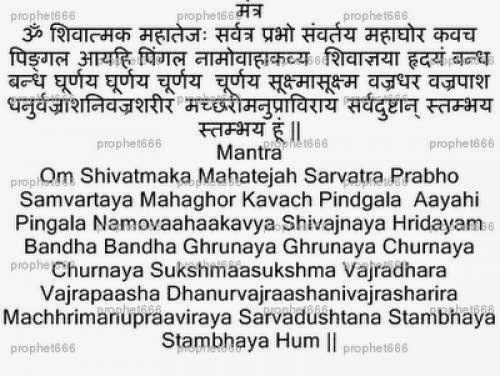
Here are some sources for beginners (not all are strictly "wiccan" but all are valuable starts):
BOOKS
"Wicca; a guide for the Solitary Practitioner" a Further guide for the Solitary Practitioner"
by Scott Cunningham
"Green Witchcraft", "Green witchcraft II >WEB
About.com "Pagan and Wiccan Religion" with Patti Wigington ;
Wicca for the Rest of Us ; (note: a tad harsh)
WitchVox. ;
Covenant of the Goddess ;
Circle Sanctuary ;
Witchschool ;
Church of Universal Eclectic Wicca ;
However, most wiccans don't get very far before they realize they need MORE. This is where wiccan reasearch comes into play. Wiccans deepen their experience through study, practice and craft.However, until you get the hang of things, research the spiritual is difficult and somewhat confusing.
Sources for more learning on wicca include (these are general good sources, keep in mind that I am an American so I may have that "Bias" on some of them, also there are MANY sources out there, these are just starting points:
Astrology : http://astrology.about.com/
Astronomy : http://www.nasa.gov/
Numerology : http://www.numerology.com/
Mathematics : http://mathworld.wolfram.com/
Divination : http://www.paralumun.com/divination.htm
Anthropology : http://www.aaanet.org/
Archaeology : http://www.archaeology.org/
History : http://www.history.com/
Mythology : http://www.pantheon.org/
Literature : http://www.literature.org/
Language : http://www.languageguide.org/
Mysticism : http://www.themystica.com/mystica/default.html
Theology : http://www.comparativereligion.com/
Philosophy : http://www.iep.utm.edu/
Psychology : http://www.apa.org/
Paranormal Study : http://www.the-atlantic-paranormal-society.com/
Martial Arts : http://www.martialinfo.com/
Yoga : http://www.yogajournal.com/
Tantra : http://www.whitelotuseast.com/
Dance : http://www.dancemagazine.com/
Folk Magic : http://www.apotropaios.co.uk/
Cooking : http://www.cooking.com/
Visual Arts : http://www.artnet.com/
Music : http://www.essentialsofmusic.com/
Gemology : http://www.yourgemologist.com/
Physics : http://www.physics.org/
Chemistry : http://portal.acs.org/portal/acs/corg/content
Alchemy : http://www.levity.com/alchemy/
Ecology : http://ecology.com/index.php
Biology : http://www.biology-online.org/
Holistic Medicine : http://www.holisticmedicine.org/
Midwifery : http://www.midwiferytoday.com/
Herbalism : http://www.americanherbalistsguild.com/
Geography : http://geography.usgs.gov/
Botany : http://www.botany.com/
Conservation : http://www.conservation.org/Pages/default.aspx
Hunting/ Fishing : http://www.outdoorsmenmag.com/
Survival : http://www.survivaltopics.com/
...etc
It is odd that all of these are "branching out" from the core subject, wicca & paganism. They are all encompassing life-skills and NO ONE will master them all. The idea is actually to view each as a tool adding to your practice and deeper understanding of wicca, our lifestyle and religion. The more you know, the more prepared you will be as your spirituality grows and your life changes. Learning about topics outside of wicca, informs your practice and broadens your horizons. Cooking dinner becomes a magical act. Hunting can become a spiritual experience, or Science can become the physical manifestation of magic.
I am "taking" this online course in "Science, Magic names, dates and locations are ideal.
Also, use a keen, critical eye. If things don't seem accurate, fact check. Try to use sources and information that is well researched and logical. If you choose to include BAD information on purpose, and you spread that information, you are still inherently responsible. In practice, if you include things that are "genuine" your experience will be that much more honest. Remember, you cannot lie to your own should and get away with it for long! You are what you include, so if you include truth and wisdom, that is what you'll get, if you include crud, you'll get crud!
Last resource: the community. There are many many incredible people, groups, and gatherings out there RICH with experience, ideas and diverse opinions! Take advantage of them. An hour conversation with a truly wise sage can outdo hours of reading or websurfing.
So, Remember: Study, Learn, Apply, Repeat.
Blessed Be!
-Megan
The Missing Yemenite Children Words Of The Lubavitcher Rebbe
Posted by
Unknown

Ps 19 2 5 The Heavens Declare The Glory Of God
Posted by
Unknown

(PS 19, 2-5) THE Tone Recognize THE Standing OF GOD;
The space speech the grandeur of God; the sky proclaims its builder's craft. One day to the adjoining conveys that message; one night to the adjoining imparts that knowledge. Acquaint with is no word or sound; no round about is heard; Yet their reveal itself goes forth express all the earth, their statement, to the ends of the world. God has oblique bestow a exhibition area for the sun; (CCC 326) The Scriptural appearance "fantasy and earth" wake all that exists, establishment in its unity. It also indicates the meld, spicy within establishment, that all unites fantasy and earth and distinguishes the one from the other: "the earth" is the world of men, equally "fantasy" or "the space" can designate all the firmament and God's own "place" - "our Inception in fantasy" and consequently the "fantasy" too which is eschatological grandeur. Up till now, "fantasy" refers to the saints and the "place" of the spiritual creatures, the angels, who cartel God (Ps 115:16; 19:2; Mt 5:16). (CCC 299) Equally God creates express wisdom, his establishment is ordered: "You carry decided all possessions by play and make and weight" (Wis 11:20). The design, bent in and by the eternal Admonition, the "image of the light God", is intended for and addressed to man, himself bent in the "image of God" and called to a idiosyncratic link with God (Col 1:15, Gen 1:26). Our material understanding, which shares in the light of the divine psyche, can understand what God tells us by wake of his establishment, nonetheless not short fanatical take a crack at and separate in a spirit of reticence and love to the lead the Planner and his work (Cf. Ps 19:2-5; Job 42:3). Equally establishment comes forth from God's piousness, it shares in that piousness - "and God saw that it was good... very good" (Gen 1:4, 10, 12, 18, 21, 31) - for God willed establishment as a gift addressed to man, an inheritance intended for and entrusted to him. On abundant occasions the Cathedral has had to spare the piousness of establishment, along with that of the physical world (Cf. DS 286; 455-463; 800; 1333; 3002).
Credit: pagan-magic.blogspot.com
Jacques De Molay
Posted by
Unknown

He was born in the eastern French village of Molay in 1244 or 45. Almost nothing is known of his early life, but he joined the Templars at the age of 21, and served 42 years as a warrior monk.
In 1291, the Holy Land fell back into the hands of the infidel, and would never fully return to Christian rule. The Templars and the Knights Hospitallers fell back to the coastal city of Acre, which was quickly lost. Both orders subsequently went to the island of Cyprus. The Templars remained here, while the Hospitallers later took the island of Rhodes. That too would be lost eventually, and the Hospitallers eventually settled in Malta, where they became known as the knights of Malta. In spite of the modern Masonic orders that unite these two orders of knights, they were bitter rivals for the wealth and favor of Europe and the Church.
Jacques de Molay was elected Grand Master in 1293 at the age of 47. Immediately he set off to England, France, Aragon and Italy to drum up support for a new crusade to the Holy Land, as well as to fend off a growing call for merging the two orders of knights. Politiucally, the Templars were regarded as the men who lost the Holy Land, and monarchies were becoming distrustful of them. France in particular was feeling overrun with returning, aging knights, who still were free from any kind of taxation or even civil laws, by virtue of Papal bulls that held the order above anyone but the Pope.
King Phillip IV of France and his personal henchman Guillaume de Nogaret had been in severe conflict with the then-reigning pope, Boniface VIII. The pope had declared that the king of France had no right to tax Church property, and the king had, obviously, disagreed. De Nogaret kidnapped an important French bishop, and the pope had come out swinging over it. He issued a papal bull proclaiming that kings must be subordinate to the Church, and that popes held ultimate authority over both spiritual and temporal matters on earth. To make sure they got the message, Boniface excommunicated Phillip and de Nogaret. Phillip answered his challenge by sending the brutal, devious and bad-tempered de Nogaret at the head of an army to meet up with Italian allies and capture the pope. Boniface was indeed kidnapped and held for three days. After literally being beaten to a pulp, he was released and died a month later. The French king had proved just who was subordinate to whom, and he didn't mind a little papal blood on his hands. Pope Boniface's successor, Pope Benedict XI, lasted only a year in office, poisoned, it was said, by de Nogaret.
But there had been diplomatic difficulties to suffer for killing two popes. Consequently, King Phillip decided it would be easier to just buy one. He began procuring cardinals, pulling strings behind the scenes until the number of French cardinals in the Vatican's College of Cardinals was equal to the Italian ones. They then obligingly elected his handpicked candidate, Bertrand de Goth, making him Pope Clement V. The city of Rome was in turmoil, and the safety of the Vatican was in question. So, it didn't take much to convince the new French pope that his life would be in serious danger by living there. Clement obliged by staying in France, having his ceremony of investiture in Lyons. He remained in France, eventually moving the Holy See to the city of Avignon (which was actually owned by the King of Sicily at the time) in 1309, right on Phillip's back door step, where he built a new papal palace. Catholics often refer to it as the "Babylonian Captivity." Nowadays it's usually called the Avignon Papacy or the Great Schism.
Clement had everything Phillip wanted in a pope: he was puny, weak, new in the job, and owed everything to his French king. Now was the time for the boldest move of Phillip's reign - the arrest of the Knights Templar.
Jacques de Molay left Cyprus to head straight for a meeting with the new Pope, and he had high hopes for success, especially since they were countrymen. He couldn't at this point have known of the dark forces that were assembling against him behind the scenes. In June of 1307, de Molay rode into Paris at the head of a column of his knights, with a dozen horses laden with gold and silver, to begin the financing the new Crusade. For the next several months, Phillip treated the aging Grand Master with interest and diplomacy, and de Molay believed he and the Order were at a new turning point.
The circumstances of the arrests on October 13th, 1307, and seven years of trials of the Templars are well known to most of us, but we are most concerned with the last Grand Master tonight. By 1314, both the pope and public opinion had abandoned the Knights Templar. The four senior Templar officers in Phillip's custody had been waiting in prison for seven grim years. All of them were old, the youngest being Gfroi de Charney, who was almost 60. Jacques de Molay was in his 70s, and had spent four years in solitary confinement.
On March 18th, 1314, the four men were finally led onto a platform in front of Paris' Notre Dame Cathedral to hear the charges and make their public confessions. The charges were read, and two of the men accepted their fate of perpetual imprisonment and were led away.
But Jacques de Molay, and his trusted follower Gfroi de Charney, did not follow suit. Weakened with age and imprisonment, de Molay shouted in a voice that startled the assembly that he and the Templars were innocent of all the charges. They were returned to their cells at once, while Phillip called together his council and quickly pronounced sentence, using the insane logic of the Inquisition; if they had recanted their confessions, then they were considered "relapsed heretics," and the penalty was the stake.
Late that afternoon, de Molay and de Charney were led to the place of execution, which was a tiny isolated island adjacent to the Isle de la Cit`e, called the Ile-des-Juifs, the "Island of the Jews." The condemned men could see Notre Dame Cathedral in the east, but the site was not chosen for their view. Rather, it was chosen so that King Phillip could enjoy the entertainment without leaving his palace just across the River Seine.
Each man was stripped down to his shirt and tied to the stake. Jacques de Molay, with unbelievable courage, asked not only that he be turned to face the Cathedral, but that his hands be freed, so that he could die at prayer. His request was granted. The two men were roasted alive by the Inquisitional method that began slowly with hot coals, so that their agony could be prolonged as much as possible.
When the Pont Neuf was built, the ^Ile des Juifs was joined to the rest of the ^Ile de la Cit'e, and today there are not one but two plaques near the bridge to commemorate this event. According to legend, Jacques de Molay did not go to his God in silence. Instead, he died defiantly shouting his innocence and that of the Templars, calling on King Phillip and Pope Clement to meet him before the throne of God in one year's time, where they would all be judged together. Creepily enough, both men, relatively young, would be dead within the year. One month after the death of de Molay, Pope Clement V, age 54, died, it was said of cancer. Phillip the Fair, age 46, would die in a hunting accident probably brought on by a stroke. He died on November 29th.
A non-Masonic order of modern Knights Templar claim deMolay appointed a successor to himself secretly, and the order survived the centuries. Masonic Templars make no such claim, but the Sovereign Military Order of the Temple of Jerusalem tells the tale that DeMolay's skull and leg bones were pulled from the ashes and secretly buried with the document of succession, called the Larmenius Charter. Others claim that during the French revolution, as King Louis XVI's head was chopped off by the guillotine, someone rushed up from the crowd and proclaimed, "Jacques De Molay, Thou art avenged!"
The gruesome death of Jacques de Molay is the last act of the Templar story. At least, the last act of the accepted, scholarly story of the Knights Templar that is told, in names and dates, between the covers of the history books. But in reality, his death is only the beginning. It's the beginning of the myth of the Knights Templar, which is the maelstrom around which an endless stream of fact blended with speculation swirls, unabated.
(Adapted from The Templar Code For Dummies)
Subscribe to:
Posts (Atom)
Popular Posts
-
We have been looking at old information in an attempt to get all the dates accurate on the School of Wicca. In December 1968 Gavin and Yvon...
-
This is a simple remedy, which can be tried by anyone if he or she is not getting a suitable job or employment; as per their capabilities an...
-
When one practices magick, and especially during ritual magick or casting a circle, one effectively takes on a new persona. Some magickal pr...
-
Well fancy that! As I'm pulling my card of the day from the spellbindingly beautiful Deviant Moon Tarot, contemplating the fact that Mer...
-
WHO IS CHIEF OF SERAPHIM AND IS HE THE CHOSEN ONE? If you are referring to Judeo-Christian history, than it is likely Seraphiel. However wha...


